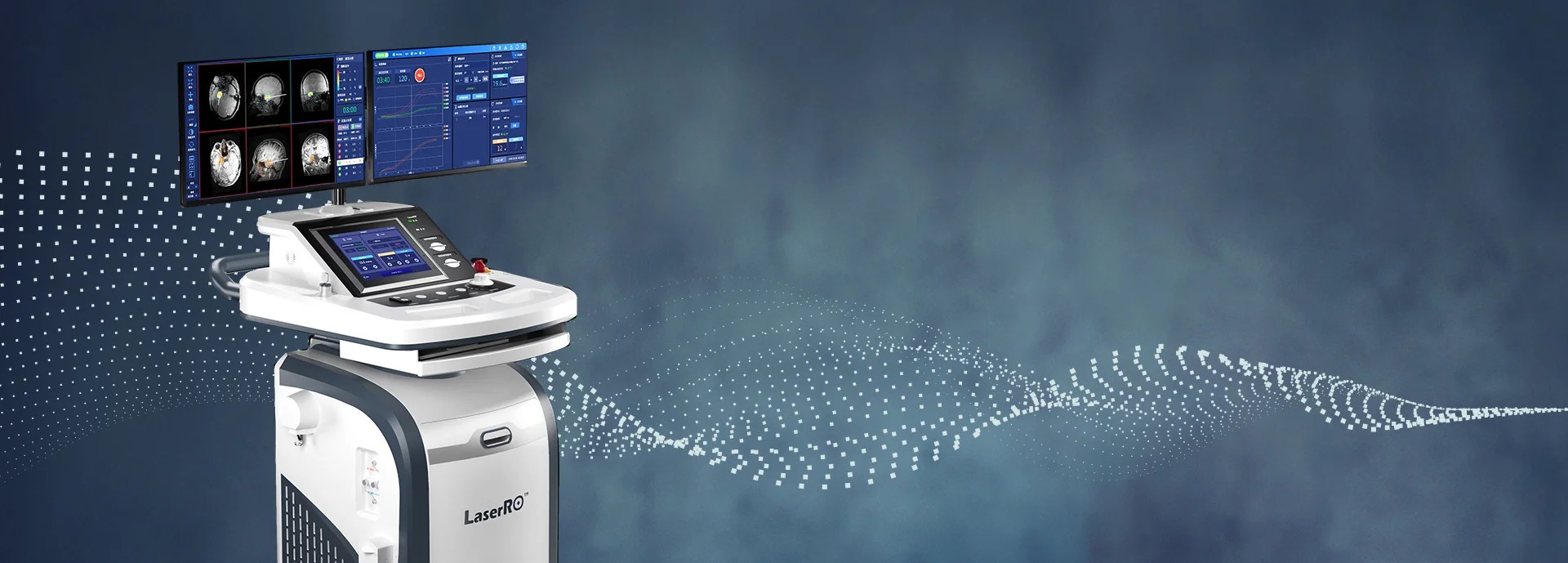
Flexible Solutions, Precise Control
LaserRO™
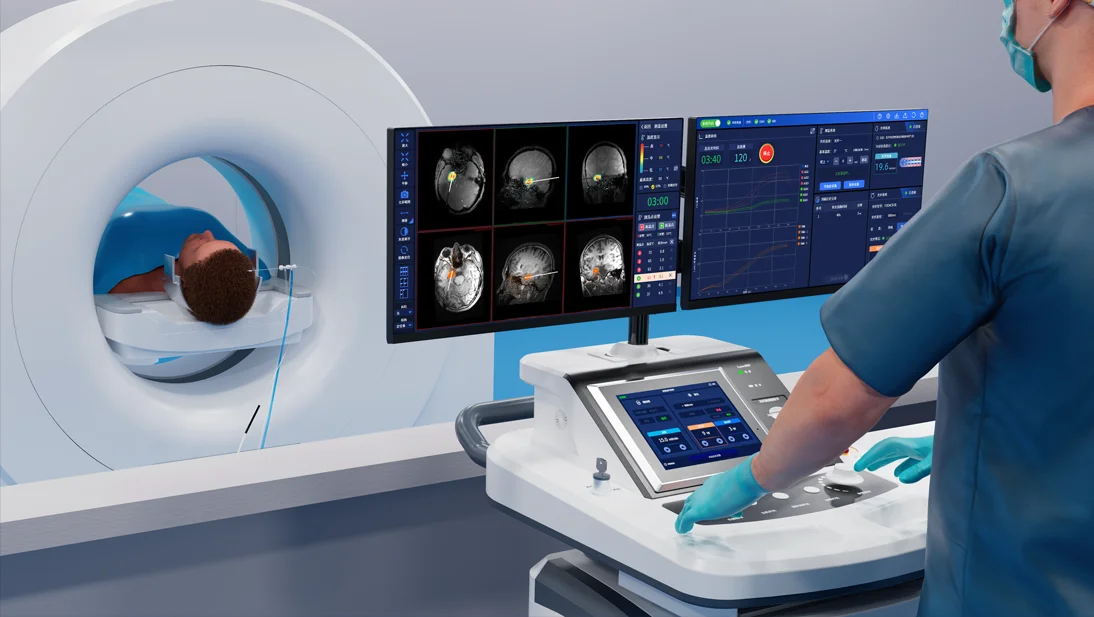
LaserRO™ Next-Generation MR-Monitored Semiconductor Laser Therapy System
Full Process Visualization

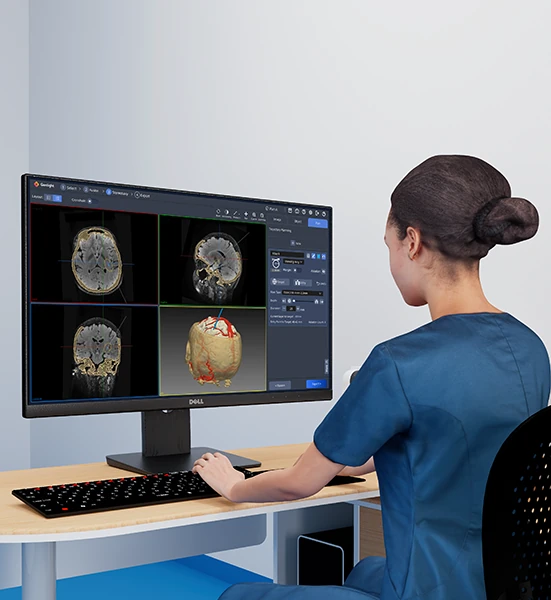
Pre-procedural Planning
- GLPATH™ enables brain region and vessel segmentation, optimizing implantation pathways and reducing surgical risks;
- Based on a self-developed thermal ablation model, GLPATH™ automatically recommends parameter settings according to the planned ablation range, improving treatment efficiency.

Intra-procedural Monitoring
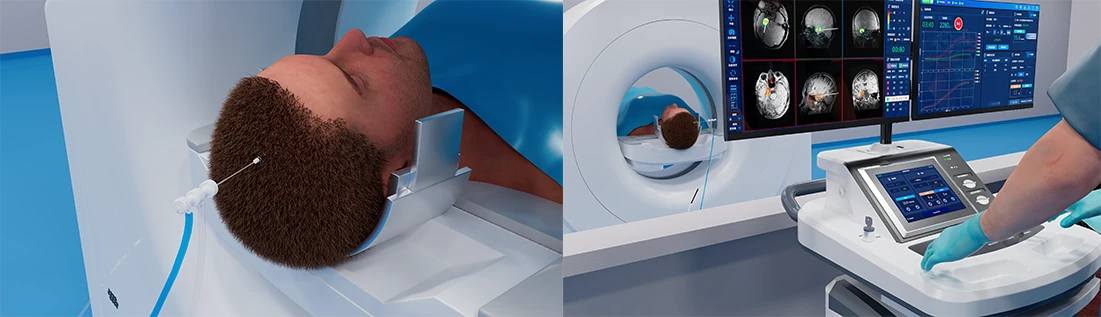
- Compatible with MRI systems, providing real-time thermal imaging feedback to help physicians precisely control the ablation treatment process;
- Monitors changes in patient head position and provides timely alerts to ensure ablation accuracy;
- Presets tissue temperature upper limits for marked areas, automatically pausing ablation when exceeded to ensure surgical safety.

Post-procedural Evaluation
- Compares the actual post-operative ablation zone with the pre-operative plan to evaluate and calculate the ablation effect.
Precision Conformal
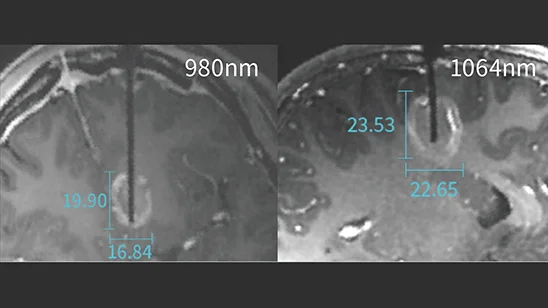
Dual-Source Dual-Wavelength Ablation Platform
- The main unit is equipped with two laser wavelengths: 980nm and 1064nm
- Depending on the lesion, single wavelength or combined application can be selected
- Supports free wavelength switching during procedures
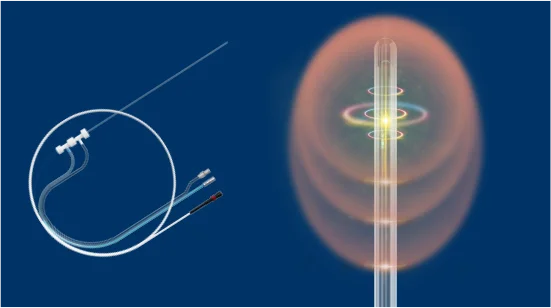
Innovative Multi-Specification Fiber Catheters
- Covers two diameters and three diffuser tip lengths
- 1.55mm ultra-thin fiber with enhanced minimally invasive properties, especially suitable for ablation treatment of deep, small lesions
Safe and Controllable Ablation Process
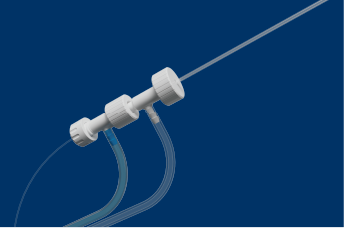
Innovative Fiber Catheter Structure
Integrated fiber and water cooling eliminates the risk of liquid leakage caused by intraoperative assembly
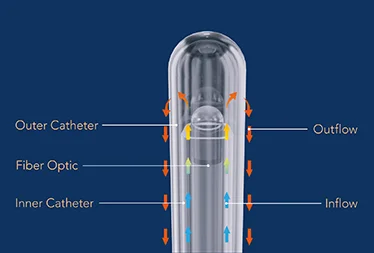
Round-Outside Square-Inside Double-Layer Sleeve
- Ensures central collimation of the fiber, avoiding uneven heat transfer caused by lateral deviation
- Ensures smooth coolant flow within the catheter, achieving efficient and reliable temperature control
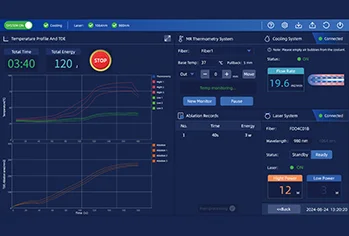
Visual Flow Monitoring and Alarm System
High-sensitivity flow sensors monitor rapidly changing coolant flow in real time, ensuring effective temperature control

Pre-procedural Planning
Use advanced pre-procedural planning software, combined with the patient's MRI or CT images, to determine the optimal fiber catheter implantation pathway and ablation range, and assess related risks.

Fiber Placement
Through a minimally invasive incision, stereotactic technology is used to precisely implant the fiber catheter into the lesion.

Transfer to MRI Suite
Transfer the patient to the intraoperative MRI device or MRI imaging room.

MRI-Guided Ablation
Confirm fiber position through MRI scanning. Perform laser ablation under MRI guidance, with real-time temperature monitoring to ensure precise control of the ablation range.

Post-procedural Recovery
After ablation is complete, remove the fiber catheter and suture the incision. Most patients can be discharged the day after surgery.